Before cleaning, always test in a small hidden area first.
Remember to wash your hands before and after playing your instrument, so that any dirt or germs on your hands aren’t transferred to your instrument.
To prevent damage when using cleaning products, spray on a cloth rather than spraying directly on the instrument.
 Guitar
Removing the strings makes it easier to clean the fretboard. It may be an idea to clean your guitar when you’re changing the strings. Make sure when you’re removing the strings to only remove a few at a time. Removing all the strings at once can cause issues with the guitar’s neck tension.
- Lightly spray 4KLEEN Multipurpose disinfectant on a lint-free microfibre cloth and wipe the neck and bridge to remove dirt, grime, dust, and sweat. Make sure strings are free of any cleaning products and damp cloths you’re using during the cleaning process. The fretboard should only be cleaned once or twice a year.
- Lightly spray 4KLEEN Multipurpose disinfectant on a soft polishing cloth and wipe any metal parts.
- Lightly spray 4KLEEN Bio degreaser on a microfibre cloth and wipe over the body of your guitar to remove fingerprints, haze, oxidation, grime, and smudges. Avoid using paper towels to clean your guitar, as they can scratch the finish.
Keyboard and piano keys

Cleaning your keyboard or piano keys every 6 months or so, depending on how often it gets played, should prevent any build-up of grime, making it easier to clean each time.
Lightly spray 4KLEEN Bio-degreaser on a microfibre cloth and wipe the keys in a “toward the player” motion. Clean the white keys first, then the black keys.
Cleaning your hands before playing your piano or keyboard is recommended, to ensure the life of your piano and keyboard keys. If you have used hand sanitizer, make sure it is completely dry on your hands before playing.
Keep your piano or keyboard covered when it’s not in use, to prevent dust build-up.
Drums
 Drums
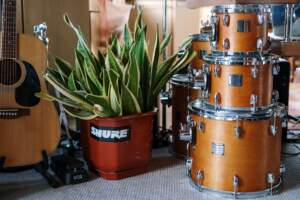
DrumsKeeping on top of your drum kit maintenance and cleaning helps to ensure durability and sound. General cleaning should be done once a month, depending on how often you play your drums. A deeper clean by disassembling and cleaning each piece individually should be done once a year.
Lightly spray 4KLEEN Multipurpose Disinfectant on a lint-free cloth and wipe all surfaces. An old toothbrush could be used to remove dust that has collected in hard-to-reach places.
After the drum rims have been cleaned and dusted, you can polish them with a chrome polisher and petroleum jelly. Petroleum jelly will help prevent rust from forming on the metal parts of the drum.