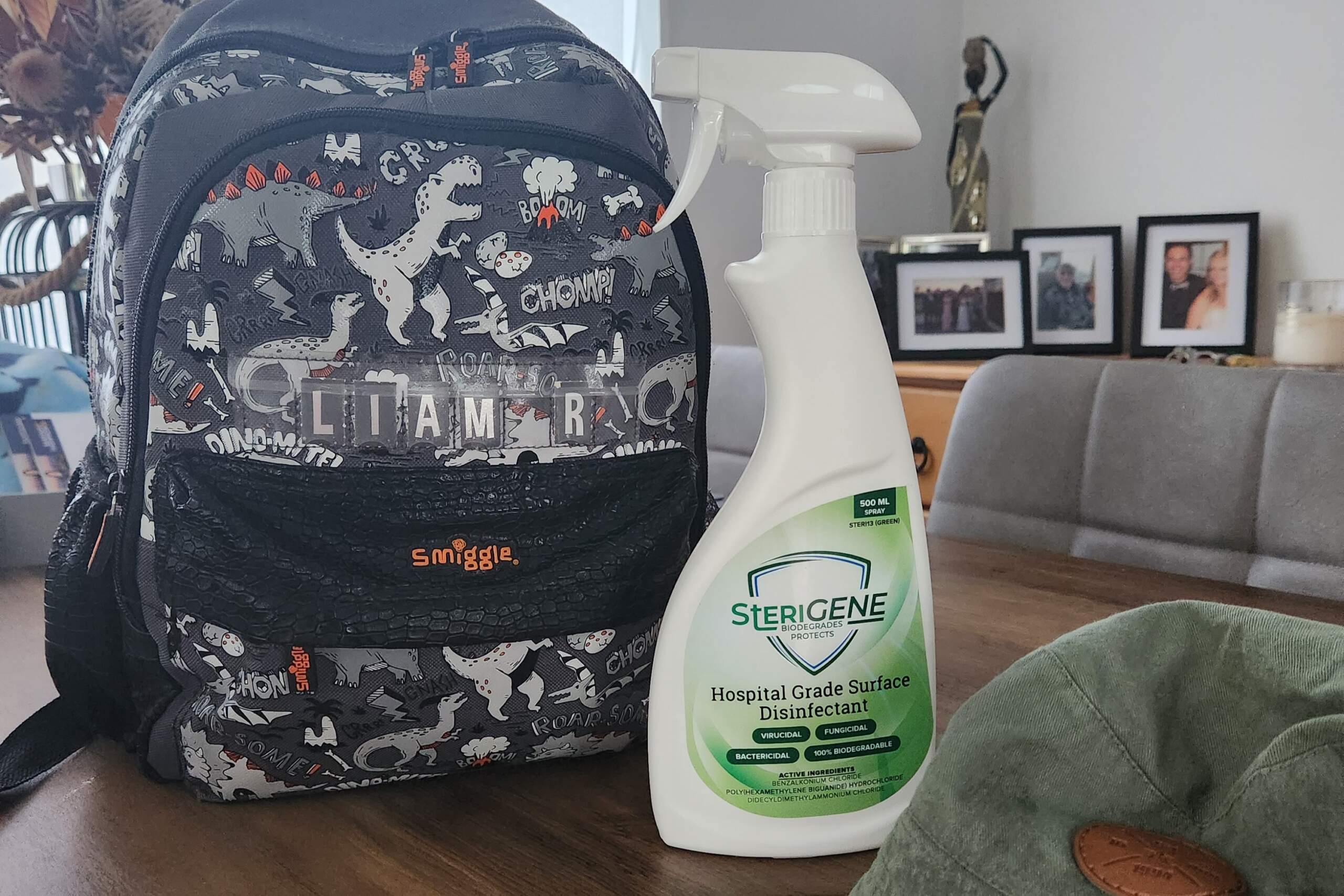
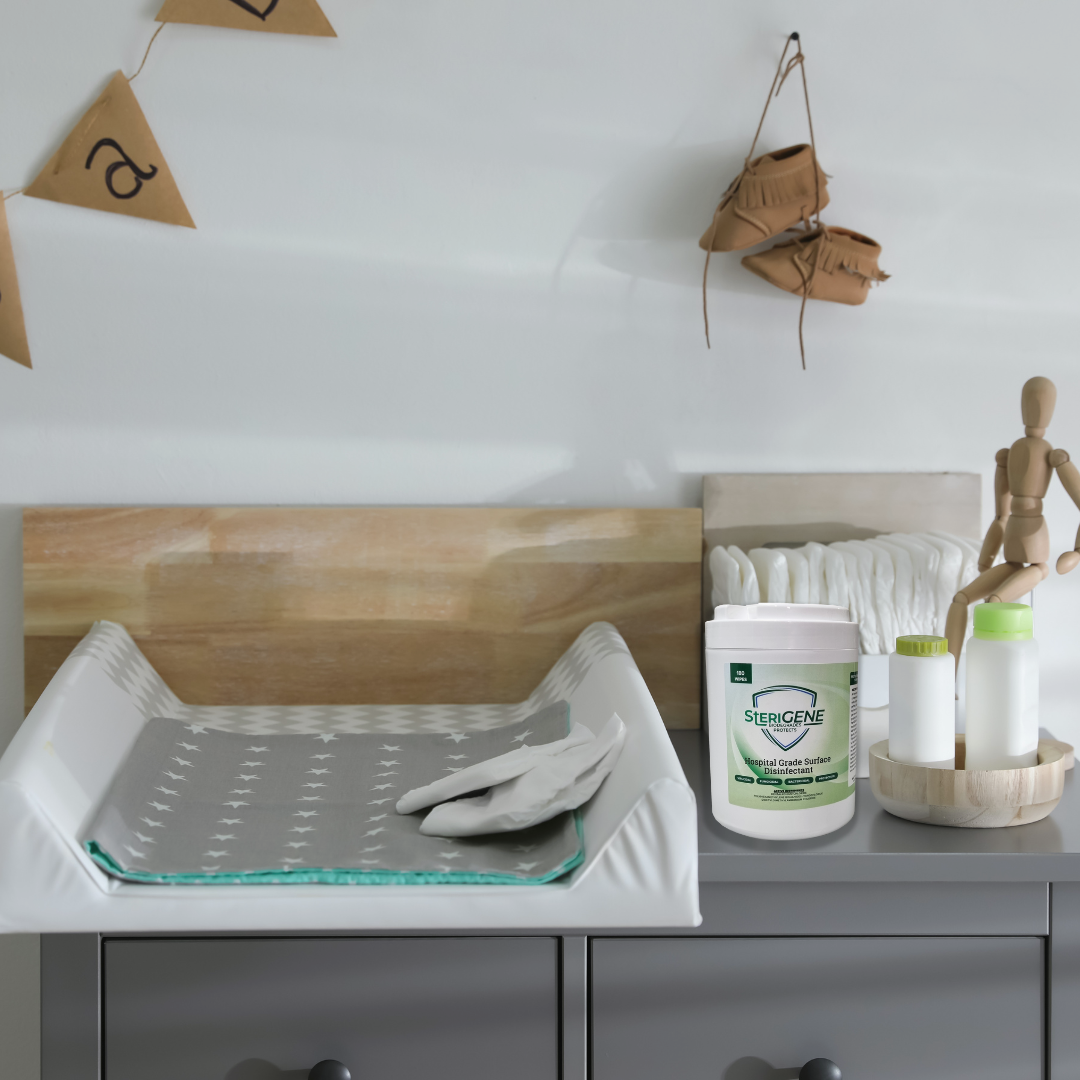
With so many disinfectant options available, it can be difficult to understand the differences, and which option is going to keep your family and community safer. We have done a deep dive into the differences, features, and efficacy of the top 10 used disinfectants in New Zealand and Australia and have listed our findings below:
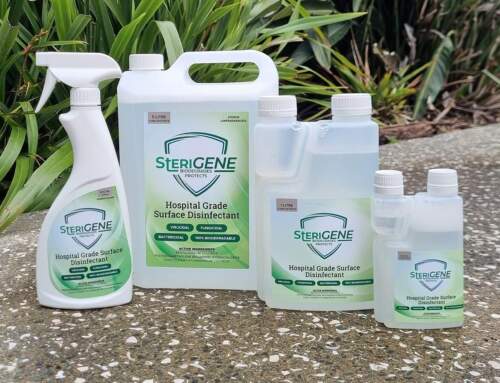
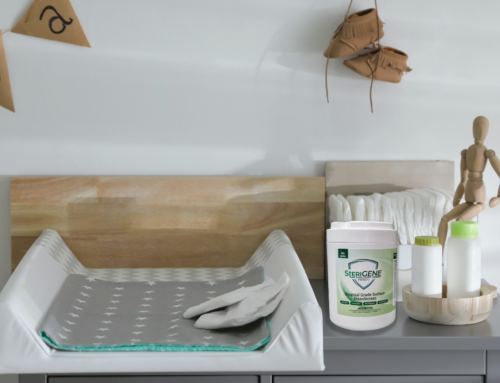
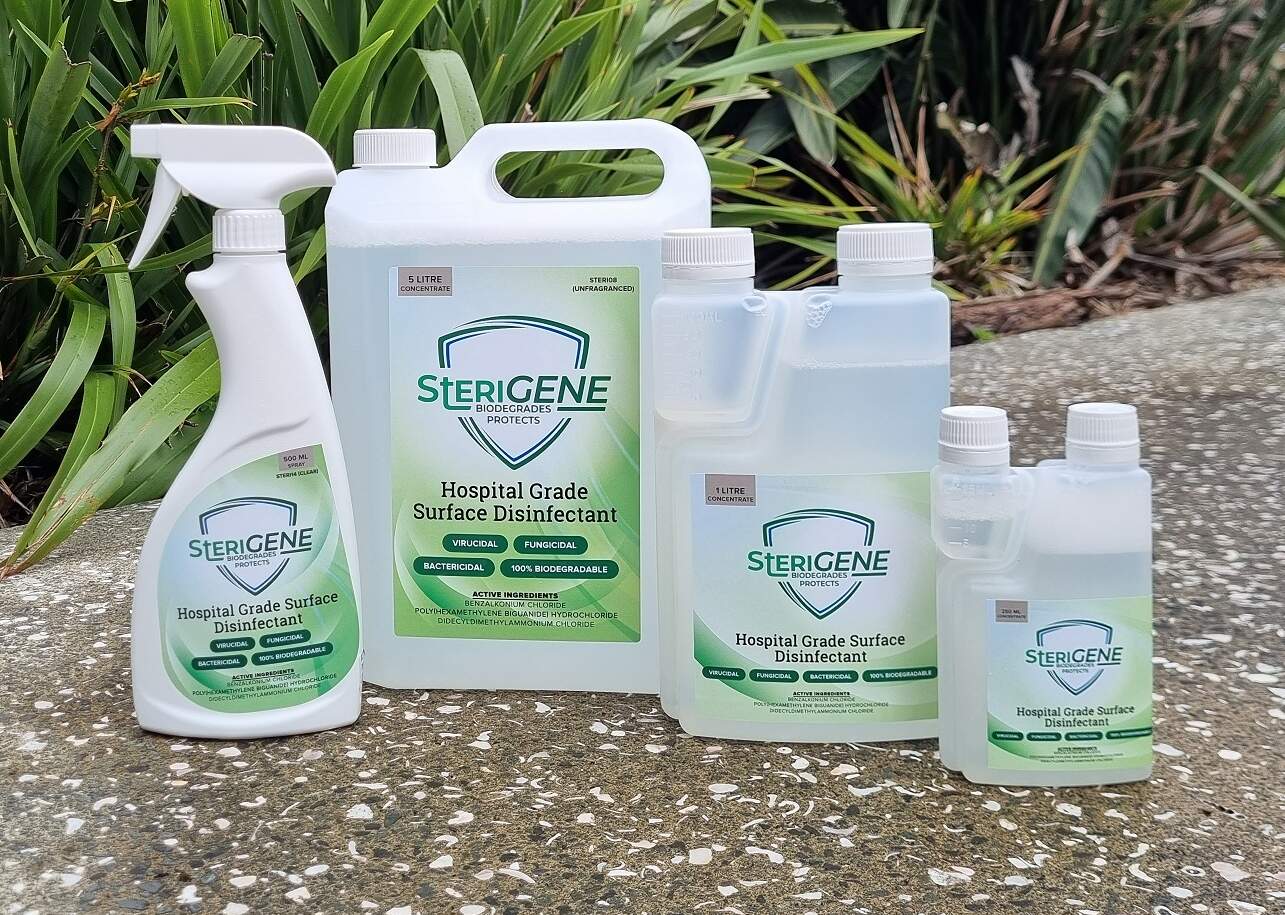
Our top pick SteriGENE is highly biodegradable (degrades at the same rate as fruit and vegetables), and kills even the hardest-to-kill virus families such as Parvo, Norovirus, and Hand foot and mouth. COVID-19 virus is completely deactivated by SteriGENE.
At a 1:100 dilution for hospital-grade disinfection level or 1:200 for general use it is cost-effective and simple to use. SteriGENE remains active for 1 year if using clean tap water or 18 months if using demineralised water.
The technology used in SteriGENE with the micro-emulsion particles helps it to penetrate surfaces deeper which causes a 70% faster mode of action and deeper disinfection. It is non-corrosive as it contains corrosion inhibitors in the formula.
SteriGENE remains active on surfaces for up to 3 months, meaning it works harder to keep bacteria, fungi, and viruses away long after you’ve disinfected your surface. We do recommend using SteriGENE again though if a surface is soiled. Which leads us to another reason we love SteriGENE: No pre-cleaning is required. SteriGENE doesn’t deactivate when it comes in contact with dirt on a surface, so it cleans and disinfects – Easy!
SteriGENE is our pick for the top disinfectant as it is more powerful, safer, and simpler to use, in addition to being environmentally friendly.
- TriGENE II
TriGENE II is a biodegradable virucidal, bactericidal and fungicidal disinfectant with high log kill rates. It is economical for use at a 1:50 dilution ratio for hard-to-kill viruses in dirty conditions or 1:100 for general disinfection. TriGENE II remains active for 6 months once diluted at home with clean tap water or 1 year if diluted with demineralised water. It is a good broad-spectrum disinfectant that is practical in a number of different industries.
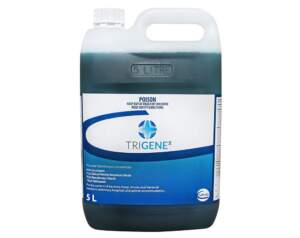
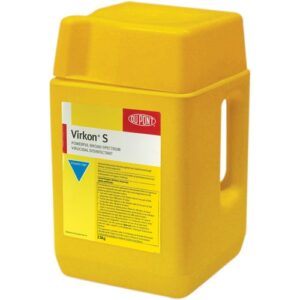
- Virkon S
Virkon S is very Corrosive due to its potassium monopersulfate and sodium chloride-based solution. It comes in powder form which makes it more dangerous to dilute at home as you risk inhaling the powder in the air which can lead to respiratory issues.
Virkon S has a short window of efficacy, only remaining active for 4-6 days once mixed at a 1:100 dilution ratio. This can lead to more frequent preparation and disposal, increasing operational costs.
It makes a good broad-spectrum disinfectant with good virucidal and bactericidal properties.
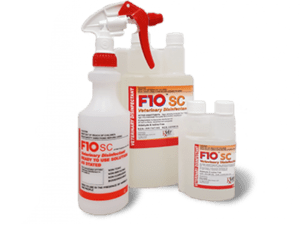
- F10
F10 is a combination of PHMB and Benzalkonium Chloride so it is a good broad-spectrum disinfectant. However, different dilution ratios are required depending on the bacteria or virus you are trying to kill which makes it a bit more complicated to use. Once mixed up with your desired dilution ratio, F10 remains active for 8 months when diluted in their factory. F10 also has a log 3 kill rate for canine parvovirus which is a low-level result.
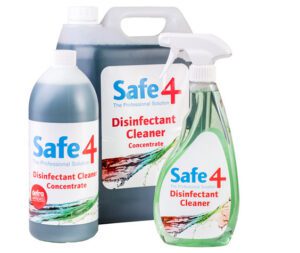
- Safe4
This is a QUAT and Polyhexamethylene biguanide (PHMB) based product. In a trial to kill Canine Parvo virus in dirty conditions at 1:50 dilution ratio it got a log 3.75 which is a low log kill rate. Log 4 is required for an EU standard pass. It is good for basic uses but if you are trying to create a broad spectrum kill that you know will work with one dilution ratio, it isn’t the product for you.
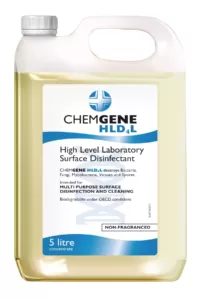
- Chemgene HLD4
Chemgene is a Chlorhexidine and Benzalkonium chloride-based product. It has some virucidal claims but primarily in clean conditions, which isn’t practical in daily use of the product. Chemgene will remain active for 6 months when diluted. A high dilution ratio of 1:50 is required to kill most viruses to an acceptable standard.
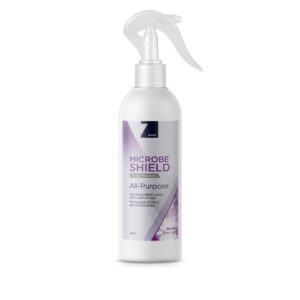
- Zoono
Zoono is a surface sanitiser focusing specifically on killing Germs, Bacteria and Corona Virus. As a result, it is a safe-to-use product but does not have very high broad virucidal or fungicidal abilities. This is why it is placed higher than Dettol but below some other broad-spectrum disinfectants.
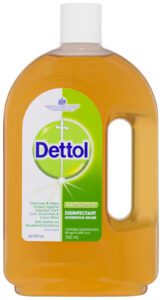
- Dettol
Although Dettol is the most commonly used disinfectant, it is a low-level disinfectant. When it comes in contact with dirt it inactivates it meaning it is no longer acting as a disinfectant. If the surface is already clean then it is a good spray and wipe solution to kill germs and some bacteria but not harder-to-kill viruses, such as Hand foot and mouth.
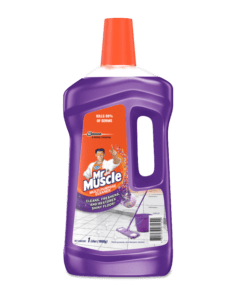
- Mr Muscle
Mr Muscle is a Quaternary Ammonium Compound meaning it is less toxic than bleach. However, as advertised, Mr Muscle kills 99% of germs, bacteria and viruses. This means that their log kill rate is a 2, which would not pass EU hospital standards which require a log 4 kill to be classified as effective.
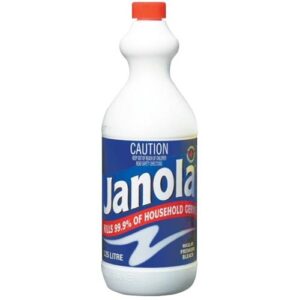
- Janola Bleach
Bleach has its place in your disinfection product suite and is versatile at stain removal, but it does have a lot of negative aspects to it which is why it is ranked here. When it comes into contact with urine it creates Phosgene gas which is also known as mustard gas. Bleach does not kill all bacteria and is ineffective on a dirty surface. This is because of its high reactive rate, bleach will work on killing whatever it comes into contact with first.
While there are a number of disinfectant options available, they’re not all created equal. Each disinfectant may have its place and be somewhat effective in keeping your family safe. We highly recommend using SteriGENE as it is the most effective in killing more bacteria, fungus (mould), and virus families than its competitors. It is not only tough germs while being kind to surfaces but also completely biodegradable, hence friendly to the environment. SteriGENE works the hardest, for the longest time to keep your family and community safer.